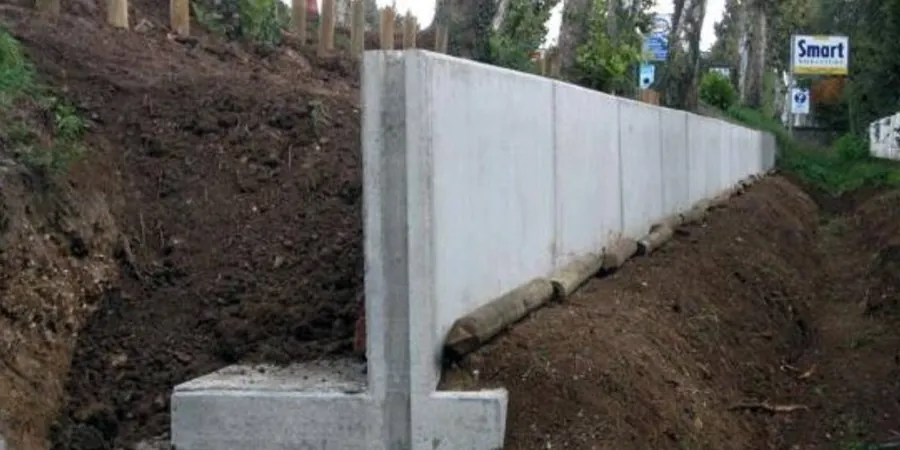
Swansea sits at an elevation averaging just 10 metres above sea level, with much of the city centre built on reclaimed estuarine flats along the River Tawe. This low-lying geography, combined with a tidal range that can exceed 10 metres during spring tides, makes retaining wall design a discipline where hydrostatic pressure is rarely the secondary concern. The local drift geology shifts abruptly between Devensian glacial till, soft alluvial silts, and the underlying Upper Coal Measures mudstone — each demanding a distinct approach to earth retention. Our team draws on extensive site investigation records across the Swansea Bay region, integrating data from CPT testing to profile the soft clays at depth and triaxial testing to establish drained shear strength parameters before committing to a wall geometry. Whether the project involves a permanent basement excavation in the Maritime Quarter or a highway cut on the A483, we work to BS EN 1997-1:2004 with UK National Annex, tailoring factors of safety to the ground model rather than applying generic assumptions.
A retaining wall in Swansea must be designed for the groundwater condition first and the retained height second — the Tawe estuary sets the rules.