GEOTECHNICAL ENGINEERING
SWANSEA

Geotechnical Engineering in Swansea

Rigorous testing. Clear reporting.

LEARN MORE

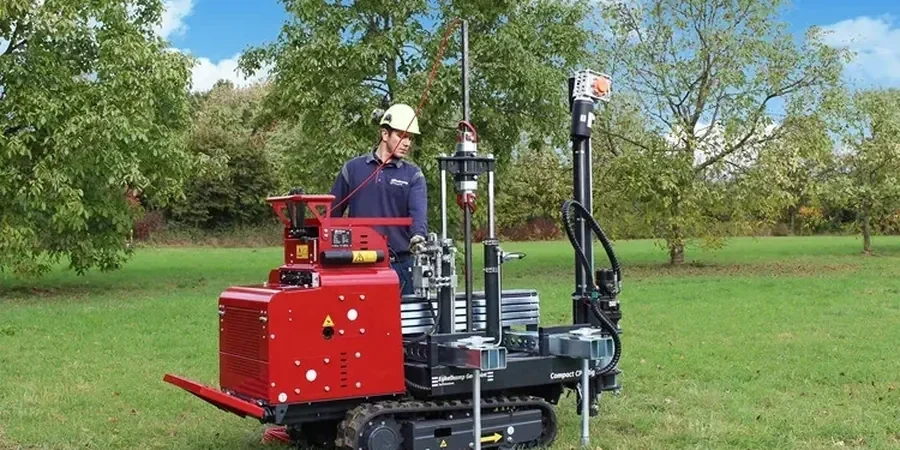
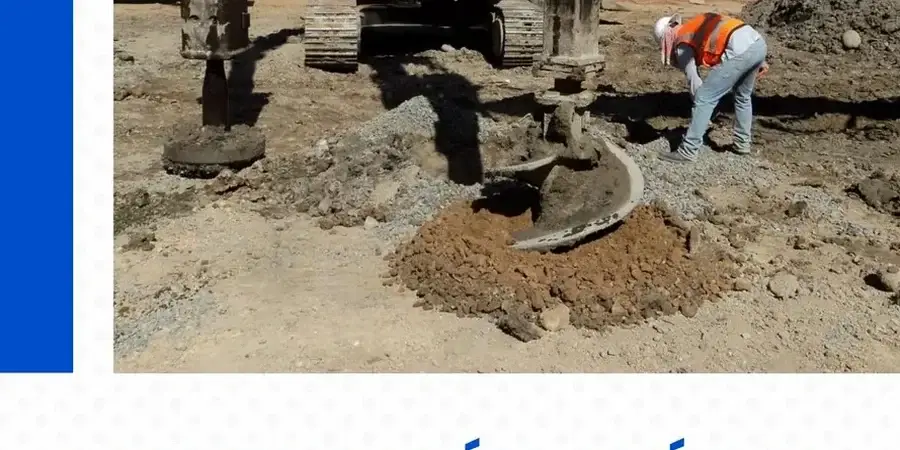
A five-storey mixed-use development on the Swansea waterfront ran into trouble when the preliminary boreholes hit compressible alluvial silts at just 2.8 metres depth, right where the lift pit was planned. The contractor had assumed stiff glacial till based on a desk study from three streets away. That single assumption would have added £180,000 in redesign costs. In Swansea, where the geology shifts from Devonian sandstone ridges to deep estuarine clays within a few hundred metres, a rigorous soil mechanics study is what separates a feasible foundation design from a costly remedial job. We run the full chain: field sampling to BS 5930, laboratory classification, and parameter derivation under Eurocode 7. For granular strata encountered in the SA1 redevelopment zone, we often complement the investigation with SPT drilling to obtain N-values and disturbed samples, while cohesive units are profiled with the CPT test to capture continuous tip resistance and pore pressure data without sample disturbance.

In Swansea's estuarine corridor, a 1.5-metre difference in borehole termination depth can miss a buried channel fill that doubles consolidation settlement.
Geotechnical Engineering in Swansea
Technical reference — Swansea

Our service areas

Local geology


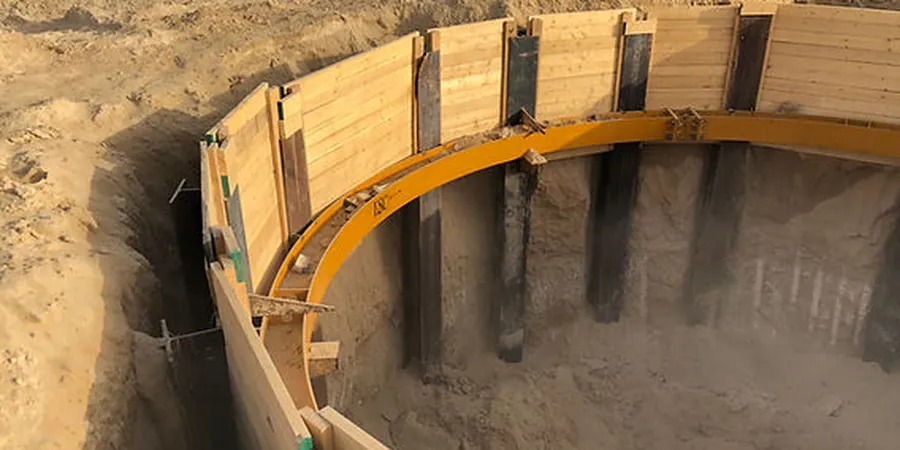
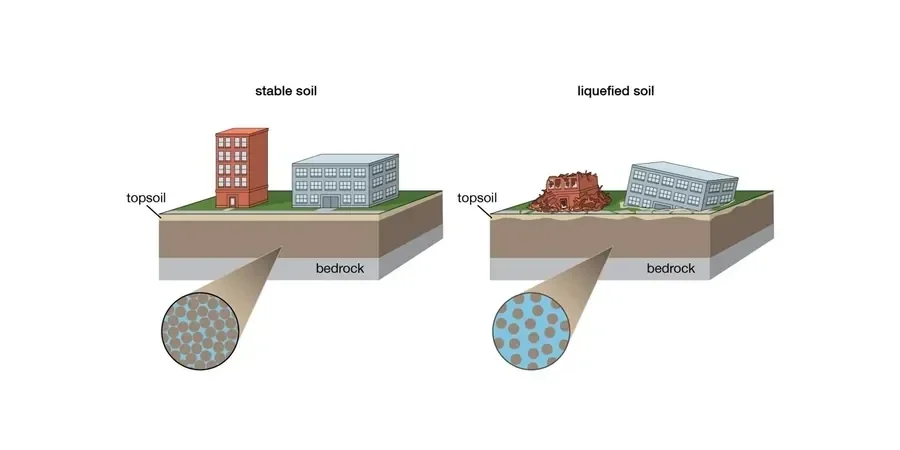
Swansea's coastal exposure means that soils are rarely inert. The combination of high rainfall, tidal groundwater oscillation, and industrial legacy fill around the Lower Swansea Valley creates aggressive ground chemistry: sulphate contents in made ground frequently exceed Class DS-3 thresholds, and pH values below 4.5 are not unusual in the Kilvey Hill colliery spoil. A soil mechanics study here must go beyond simple bearing capacity. We run oedometer consolidation tests to quantify settlement under the sustained loads typical of university buildings and hospital extensions, direct shear and triaxial tests to capture effective stress parameters for slope stability checks, and chemical analysis to specify the correct concrete design class. On sloping sites near Townhill, where the glacial head deposits thin out over sandstone, the slope stability assessment becomes critical: a 3-metre cut can expose weathered rock with unfavourable joint orientations. Our laboratory programme is calibrated to derive the peak and residual friction angles that feed directly into limit equilibrium models, avoiding the conservatism of generic textbook values.

Relevant standards

BS 5930:2015+A1:2020 – Code of practice for ground investigations, BS EN 1997-1:2004 (Eurocode 7) – Geotechnical design, general rules, BS 1377:1990 – Methods of test for soils for civil engineering purposes, BRE Special Digest 1 – Concrete in aggressive ground, CIRIA C733 – Asbestos in soil and made ground

Need a geotechnical assessment?

Reply within 24h.

Email: contact@geotechnical-engineering.biz

Why choose us

The buried channel of the River Tawe's palaeo-system runs diagonally under the city centre, filled with soft organic clays and peat lenses up to 6 metres thick. Standard boreholes that terminate at 10 metres can completely miss this feature if not positioned with geophysical guidance. A soil mechanics study that relies solely on point data risks interpolating a stiff profile where none exists, leading to differential settlement between adjacent building columns. The problem is compounded by Swansea's tidal range: a 9-metre spring tide fluctuation drives cyclic pore pressure changes in the superficial deposits, accelerating consolidation settlement under foundations that were designed for static water conditions. We address this by integrating in-situ permeability testing with laboratory falling-head and triaxial permeability measurements, building a coupled flow-deformation model that reflects real boundary conditions rather than simplifying assumptions about the water table.

Technical parameters

ParameterTypical value
Sampling standardBS 5930:2015+A1:2020
Triaxial test typeCIU, CID, UU (BS 1377-7:1990)
Consolidation testOedometer, incremental loading (BS 1377-5)
Shear box60 mm & 100 mm, peak/residual (BS 1377-7)
Chemical suitepH, SO₄, Cl, Mg, aggressive ground BRE SD1
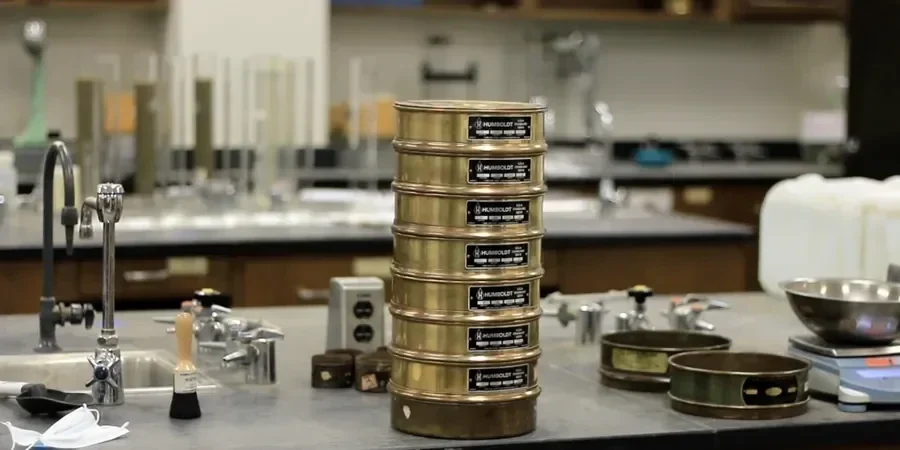
Particle size analysisWet sieving + hydrometer (BS 1377-2)
Atterberg limitsLL, PL, PI (BS 1377-2:1990)
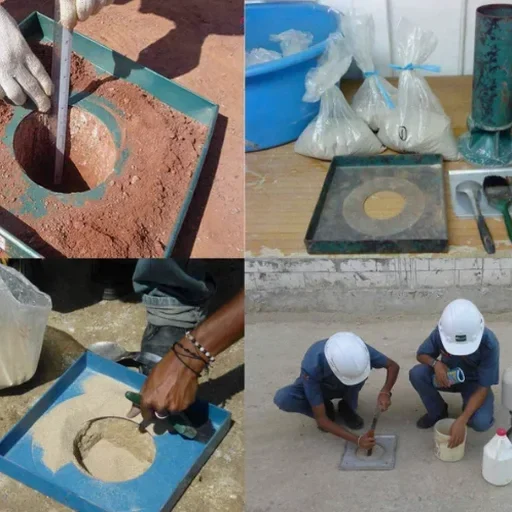
Compaction2.5 kg & 4.5 kg rammer, CBR mould (BS 1377-4)

Q&A

How long does a soil mechanics study take for a typical Swansea residential plot?

For a single dwelling on a cleared plot, we typically complete the field sampling in one day and deliver the laboratory results within 10 to 12 working days. Consolidation tests extend the programme by about a week due to the incremental loading stages required by BS 1377-5. Rush scheduling is available when the contractor needs pile design parameters before the groundworks tender deadline.

What is the cost of a soil mechanics study in Swansea?

The fee for a soil mechanics study in Swansea ranges from £2,650 to £4,740, depending on the number of boreholes, the depth of investigation, and the laboratory test schedule. A standard residential investigation with two boreholes, classification tests, and a basic chemical suite sits at the lower end; projects requiring triaxial tests, oedometer consolidation, or sulphate profiling in made ground fall toward the upper end.

Which British Standards apply to soil mechanics testing in Swansea?

Field investigation follows BS 5930:2015+A1:2020. Laboratory testing is conducted to BS 1377:1990 (Parts 2, 4, 5, 7, and 8). Design parameter derivation complies with BS EN 1997-1:2004 (Eurocode 7) and the UK National Annex. For concrete specification in aggressive ground, we reference BRE Special Digest 1.

How do you handle the aggressive ground conditions found in the Lower Swansea Valley?

We run a full chemical suite including water-soluble and acid-soluble sulphate, pH, chloride, and magnesium on every sample from made ground or colliery spoil. Results are classified per BRE SD1 and the Design Sulphate Class is reported directly to the structural engineer. If pH falls below 3.5, we recommend additional testing for aggressive carbon dioxide and ammonium.

Can you test for asbestos in soils during the soil mechanics study?

Yes. Swansea has extensive areas of historical industrial fill, particularly in the Hafod and Landore districts, where asbestos-containing materials are occasionally present. We include asbestos screening as part of the soil mechanics study when site history indicates risk, following CIRIA C733 guidance and UKAS-accredited methods for identification and quantification.

Explanatory video

Location and service area

We serve projects across Swansea and its metropolitan area.

View larger map