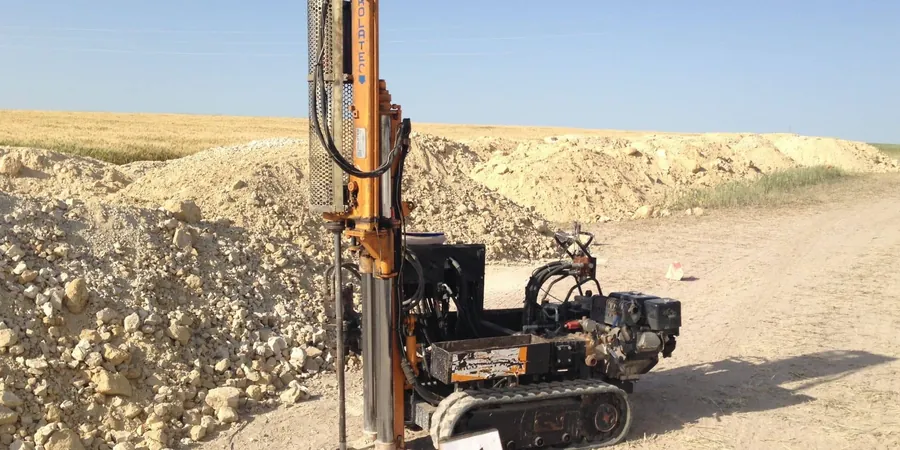
A water-filled pressure cylinder, a packer assembly sealing off a borehole section, and a graduated flow meter ticking over as water infiltrates the formation—that is the core of the equipment you will see on a Swansea site when we run a packer test. Whether it is a Lefranc test in the sandy lenses of the Swansea valley or a Lugeon test in the Pennant sandstone, the kit travels in a compact van and is rigged directly over the drill casing. In our background across the city, from the marina redevelopments to the hillside plots of Sketty, the data from these tests often reshapes the drainage design because the permeability values measured in the borehole rarely match the textbook estimates for the local glacial till. We also push for a combined approach where the in-situ permeability data is cross-checked with grain-size distributions from the same borehole, avoiding the common trap of relying solely on one method in such a heterogeneous geology.
A Lugeon value below 3 often indicates grout-tight rock, yet in the fractured Pennant sandstone around Swansea we have measured values above 15 where open joints connect to the water table.