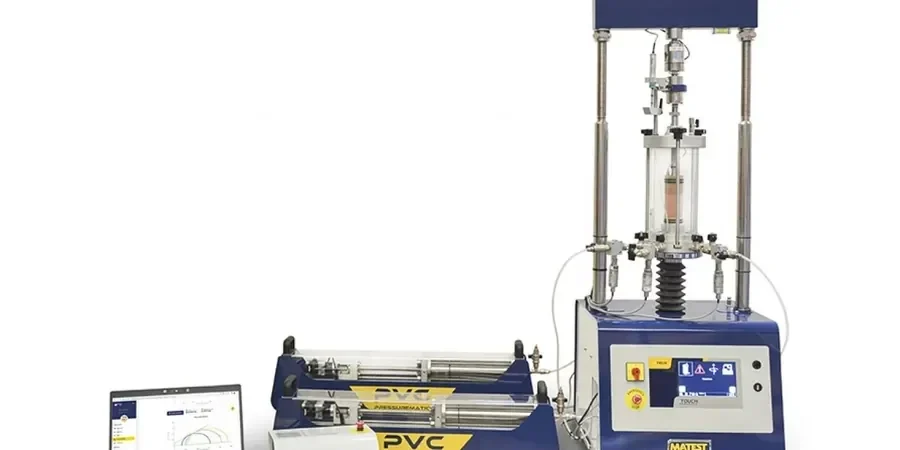
Geotechnical laboratory testing forms the backbone of safe and compliant construction across Swansea, providing essential data on the physical and mechanical properties of soils and rocks. This category encompasses a suite of controlled tests designed to classify materials, predict behaviour under load, and assess suitability for foundations, earthworks, and infrastructure. In a city undergoing significant regeneration—from the Swansea Central North development to coastal defence upgrades—accurate lab analysis is not merely a contractual checkbox but a fundamental requirement for managing ground risk. solutions such as grain size analysis (sieve + hydrometer) and Atterberg limits deliver the index properties needed to build reliable ground models, ensuring that designs account for the real variability of local strata.
Swansea's geological setting directly shapes the laboratory testing demands. The city straddles a complex transition from the Coal Measures and Pennant Sandstone of the South Wales Coalfield uplands to the north, down through glacial till and glaciofluvial deposits, to the estuarine alluvium and marine clays of the Tawe and Neath river corridors. Coastal zones feature soft, normally consolidated silts and peats, while inland sites often encounter weathered sandstone, mercia mudstone, and variable made ground from centuries of industrial activity. This diversity means that a single borehole can pass through granular, cohesive, and organic soils in quick succession, making classification through laboratory testing indispensable for predicting settlement, bearing capacity, and drainage characteristics.
Compliance with British and European standards governs every stage of laboratory work in Swansea. Testing procedures follow BS 1377 for soils, BS EN ISO 17892 for geotechnical investigation, and where rock is encountered, BS 5930 provides the overarching code of practice. The UK Specification for Ground Investigation, together with Eurocode 7, mandates that characteristic values used in design must be derived from a sufficient number of laboratory tests, with due consideration given to sample disturbance and material variability. For brownfield sites common in Swansea's former industrial quarters, the Environment Agency's Land Contamination Risk Management framework also requires chemical testing alongside physical classification, ensuring that any contamination is characterised in parallel with the geotechnical profile.
The types of projects that routinely require comprehensive laboratory testing in Swansea range from residential housing developments on sloping till sites in Sketty to major infrastructure like the Fabian Way corridor improvements and the proposed tidal lagoon. Foundation design for student accommodation blocks in the city centre relies on accurate shear strength and consolidation parameters to prevent excessive settlement in compressible alluvial soils. Highway schemes and drainage installations depend on compaction characteristics and permeability data, while slope stability assessments for the steep valley sides of the Tawe Gorge demand effective stress parameters from triaxial testing. Each project, whether a small extension or a multi-storey commercial build, benefits from a testing programme calibrated to the specific ground conditions and structural demands.
Laboratory testing provides the precise classification and engineering parameters of local soils—such as strength, compressibility, and permeability—that cannot be reliably estimated from field observations alone. Given Swansea's varied geology of glacial tills, alluvial clays, and made ground, these measured values are essential for designing foundations, assessing settlement risk, and meeting the requirements of Eurocode 7 and the UK Specification for Ground Investigation.
The primary standard is BS 1377, which details methods for classification, compaction, and strength tests. BS EN ISO 17892 covers many of the same procedures under the European framework. Additionally, BS 5930 provides the code of practice for site investigation, and all testing should align with the requirements of Eurocode 7 for deriving geotechnical design parameters from laboratory data.
The city's geology ranges from soft estuarine silts and peats along the Tawe Valley to stiff glacial tills and weathered Coal Measures sandstone. Soft, compressible soils typically require consolidation and triaxial tests to assess settlement and shear strength, while granular tills and sands need particle size distribution and compaction tests. A flexible laboratory programme, often beginning with index tests, is tailored once the basic soil types are identified from borehole logs.
The number of samples depends on site variability and project risk, but BS 5930 and Eurocode 7 require enough tests to derive statistically meaningful characteristic values. For a medium-sized development in Swansea, this often means testing multiple specimens from each distinct stratum encountered across several boreholes, ensuring that results reflect the true range of material properties rather than isolated anomalies.
We serve projects across Swansea and surrounding areas.