GEOTECHNICAL ENGINEERING
SWANSEA
HomeInvestigationCPT (Cone Penetration Test)

Cone Penetration Testing (CPT) in Swansea — Fast Stratigraphy Without Boreholes

Rigorous testing. Clear reporting.

LEARN MORE

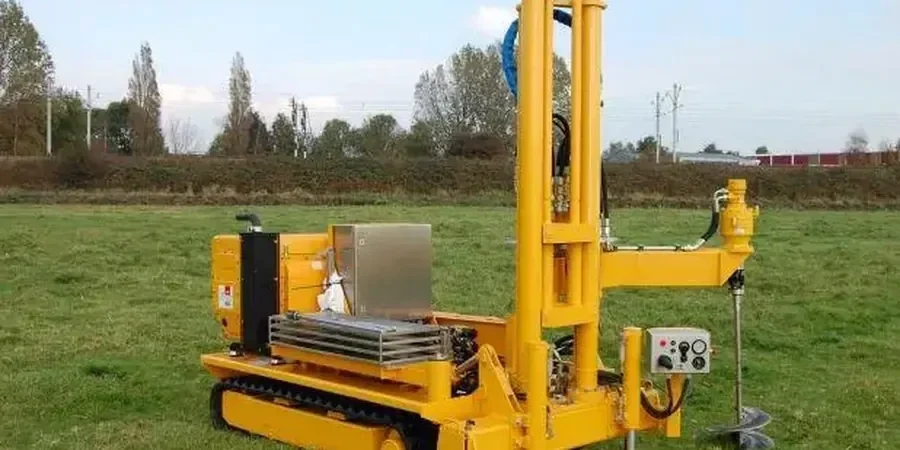
The truck-mounted CPT rig arrives with a 20-tonne reaction mass and a cylindrical steel cone just 35.7 mm across. That slim probe is the heart of the operation. In Swansea, where glacial till and weathered Coal Measures alternate inside a few hundred metres, you need a machine that reads the ground in real time. The cone pushes down at a steady 20 mm per second while sensors measure tip resistance, sleeve friction, and dynamic pore pressure. Every centimetre produces a data point. No drilling, no cuttings, no delay. For builders working the SA1 waterfront or the upland clays near Killay, this means one thing: you know what is under the slab before the concrete truck arrives. The information feeds directly into Eurocode 7 designs and helps avoid the kind of over-excavation that kills budgets on brownfield sites. When we combine CPT data with lab-based triaxial testing, clients get drained and undrained strength parameters that let them trim foundation sizes confidently.

In Swansea's glacial till, a CPT rig can identify a 100 mm sand lens at 6 metres — the kind of detail that changes an entire dewatering plan.
Our service areas

Approach and scope

Ground conditions change sharply between Swansea Vale and the slopes below Townhill. On the alluvial plain near the River Tawe, soft estuarine silts and peat lenses can extend 8 metres deep. The CPT rig registers friction ratios below 1% in those zones — classic undrained soft clay behaviour. Just two kilometres north, in the boulder clay that blankets much of Morriston, the cone hits spikes of 15 MPa or more where cobbles sit in the matrix. That contrast matters enormously when you are pricing a piled foundation or a Improvement scheme. The CPT test logs it all in one push, giving you a continuous profile instead of the five-point SPT average you would get from a cable tool rig. The sleeve friction and pore pressure channels also let the engineer flag thin drainage layers that traditional borehole logging misses. For sites where contamination is a concern, the zero-spoil method keeps the investigation clean and avoids bringing cuttings to the surface. This speed and resolution are why our Swansea clients often request CPT as the primary site characterisation tool before committing to vibrocompaction or rigid inclusion designs.
Cone Penetration Testing (CPT) in Swansea — Fast Stratigraphy Without Boreholes
Technical reference — Swansea

Site-specific factors

BS EN 1997-2 treats the cone penetration test as a primary investigation method, not an add-on. In Swansea, ignoring the CPT can expose a project to two specific failure modes. The first is undetected soft clay pockets within the glacial sequence. These lenses, often less than 500 mm thick, act as preferential slip surfaces when a retaining wall or embankment loads the ground. A standard borehole with SPT every 1.5 metres can miss them entirely. The second risk is pore pressure build-up in the estuarine silts along the Tawe corridor. During pile driving or rapid fill placement, excess pressures can halve the effective stress and trigger a bearing failure that no conservative design factor would have caught. The CPT measures pore pressure response directly — when the u2 sensor spikes during penetration and decays slowly, that is a warning sign the site needs staged loading or vertical drains. Claims arising from ground-related delays on commercial builds in Swansea routinely exceed six figures, and the CPT data set is often the piece of evidence that determines liability.

Need a geotechnical assessment?

Reply within 24h.

Email: contact@geotechnical-engineering.biz

Relevant standards


BS EN ISO 22476-1:2012 — Geotechnical investigation and testing. Field testing. Electrical cone and piezocone penetration test, Eurocode 7 — BS EN 1997-2:2007 — Ground investigation and testing, BS 5930:2015+A1:2020 — Code of practice for ground investigations

Technical parameters

ParameterTypical value
Cone tip resistance (qc)0–50 MPa (typical Swansea range)
Sleeve friction (fs)0–500 kPa
Pore pressure (u2)0–2.5 MPa
Penetration rate20 mm/s ±5 mm/s
Maximum depth capacity25 m in Swansea drift deposits
Data sampling interval10 mm (standard)
Friction ratio (Rf)calculated automatically per push
Reporting standardBS EN ISO 22476-1:2012

Q&A

How deep can a CPT rig penetrate in Swansea ground conditions?

In the drift deposits typical of Swansea — glacial till, alluvial silts, and weathered Coal Measures — our 20-tonne rigs routinely reach 20 to 25 metres. Refusal occurs when the cone hits dense boulder beds or fresh bedrock, which in this area often happens at the top of the Pennant Sandstone. We advise clients to budget for a seismic cone if bedrock depth confirmation is critical.

What does a CPT test cost for a site in Swansea?

For a single push in the Swansea area, expect to invest between £120 and £180 per linear metre, depending on access conditions and the number of pushes required in a day. Mobilisation is priced separately and depends on distance from our nearest operational base. A typical half-day programme of four pushes on a residential plot gives excellent coverage for less than the cost of one unexpected over-excavation.

Can the CPT identify contamination in the ground?

The piezocone itself does not measure chemical contamination, but the zero-spoil method is a significant advantage on brownfield sites in Swansea. No cuttings come to the surface, so there is no contaminated waste to handle or classify. We can pair the CPT push with a membrane interface probe or laser-induced fluorescence cone on the same day if hydrocarbon screening is required.

Location and service area

We serve projects across Swansea and its metropolitan area.

View larger map