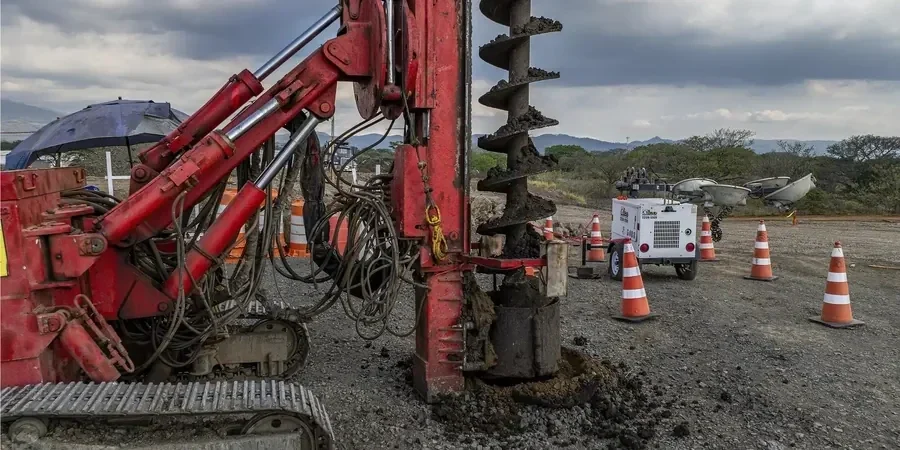
Swansea sits barely 10 metres above sea level across much of its centre, and the estuarine alluvium of the Tawe and Neath valleys runs deep — often 8 to 15 metres of soft silty clay before you hit anything competent. That’s the reality behind most foundation challenges here, and it’s exactly why stone column design keeps coming up in pre-construction meetings. We’ve worked on everything from warehouse slabs in Llansamlet to residential blocks in the SA1 redevelopment zone, and the question is rarely *whether* to improve the ground but *how*. A well-executed stone column scheme transfers load through the soft layer by forming dense, compacted gravel columns that reinforce the weak matrix, boosting bearing capacity and accelerating consolidation. In Swansea’s tidal-influenced groundwater conditions, the drainage function of the columns matters just as much as the reinforcement — something a standard CPT test can quantify before the design stage, giving us a continuous profile of undrained shear strength without disturbing the sensitive fabric of the clay.
In Swansea’s tidal clays, stone columns often halve the consolidation time compared to prefabricated vertical drains alone — the dual function of reinforcement and drainage is what makes them cost-effective here.