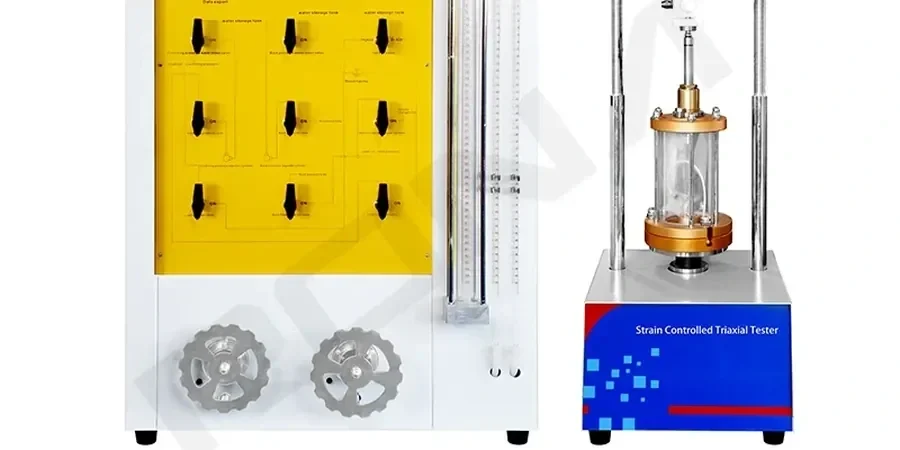
A contractor on the SA1 waterfront recently had a foundation design rejected because the desk study assumed drained strength parameters from generic tables. The site sits on the Swansea tidal flat deposits—soft, normally consolidated silts interbedded with sand lenses that behave very differently once loaded. We ran a consolidated-undrained triaxial test with pore pressure measurement on Shelby tube samples taken at 6 m depth, and the effective stress envelope shifted the entire bearing capacity calculation. In a city where post-glacial deposits and weathered Coal Measures mudstone coexist within a single postcode, assuming parameters is a direct path to overdesign or undercutting the factor of safety. The triaxial test is the only laboratory method that replicates the in-situ stress path closely enough to extract c' and φ' with confidence, and our UKAS-accredited setup in Swansea handles everything from soft alluvium to stiff glacial till under back pressures that ensure full saturation. When the design calls for a slope stability analysis on a cutting in the Neath-Port Talbot corridor, the difference between a peak and residual friction angle can determine whether a reinforcement scheme is needed.
Effective stress parameters from a properly saturated triaxial test can reduce foundation size by 20-30% compared with conservative total stress assumptions, paying for the testing programme ten times over.