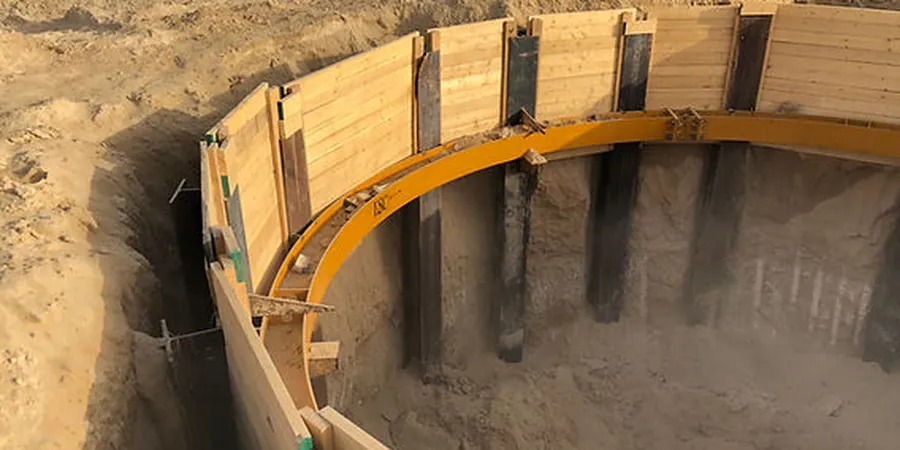
Foundations form the critical interface between any structure and the ground beneath it, transferring loads safely into the earth while resisting movement from settlement, heave, or lateral forces. In Swansea, the importance of robust foundation design cannot be overstated. The city's rich industrial heritage, coastal exposure, and varied topography mean that ground conditions can change dramatically within a single postcode, from the alluvial deposits of the Tawe Valley to the glacial tills and weathered bedrock on the surrounding hillslopes. A properly designed foundation is not merely a construction requirement; it is a long-term safeguard against structural failure, cracking, and water ingress, ensuring the longevity and safety of residential, commercial, and infrastructure assets across the region.
Swansea's geology presents a complex patchwork that directly dictates foundation strategy. Much of the city centre and the SA1 waterfront redevelopment area is underlain by soft estuarine alluvium, silts, and peat layers associated with the River Tawe and its former floodplain. These soils are typically weak, highly compressible, and subject to variable saturation, demanding careful consideration of bearing capacity and settlement. In contrast, areas rising towards Townhill, Kilvey Hill, and the Gower fringe encounter stiff glacial boulder clays and the Pennant Sandstone measures of the South Wales Coalfield. This juxtaposition means that a solution suitable for a valley site may be entirely inappropriate for a hillside plot just a mile away, often necessitating deep foundation approaches like pile foundation design to bypass poor superficial deposits and reach competent bedrock.
The regulatory framework for foundations in Swansea is governed by UK-wide standards, primarily Eurocode 7 (BS EN 1997: Geotechnical Design) and its UK National Annexes, along with BS 8004:2015 for concrete foundations and BS 8002 for earth retaining structures. Building Regulations Approved Document A provides structural safety requirements, while the Party Wall etc. Act 1996 applies for excavations near neighbouring properties. Local planning authorities, the Coal Authority, and Natural Resources Wales also impose specific constraints, particularly regarding mine workings, flood risk zones, and Sites of Special Scientific Interest along the coast. All ground investigations must comply with BS 5930:2015, and it is standard practice for projects to involve a Suitably Qualified Person under the LABC warranty scheme to sign off on foundation designs.
The types of projects requiring comprehensive foundation engineering in Swansea are diverse. High-density residential developments on former industrial brownfield sites, such as those across the Enterprise Zone, demand rigorous soil remediation and often piled solutions to manage contamination and poor ground. Coastal defence works, commercial towers in the city core, and retrofit underpinning for historic terraced housing affected by subsidence all fall within this category's remit. Even domestic extensions on sloping Gower plots require site-specific designs to address lateral ground movement. For complex scenarios, a detailed pile foundation design service becomes essential, providing the deep load transfer needed to ensure stability where shallow footings would be inadequate.
Swansea's primary challenges stem from its varied geology. The Tawe Valley contains deep alluvial deposits of soft clay, silt, and peat which are prone to settlement. Hillside locations feature glacial till over bedrock, creating slope stability issues. Additionally, historical coal mining in the region introduces the risk of shallow mine workings and subsidence, while coastal areas face aggressive ground sulfates that can attack concrete.
The decision is based on a ground investigation report. If boreholes or trial pits reveal weak, compressible soils to a significant depth, or if the design loads exceed the safe bearing capacity of near-surface strata, a deep foundation like piles will be necessary. Proximity to trees, adjacent structures, or slopes can also dictate a piled solution to transfer loads to a more competent stratum well below the surface.
Foundation design in Swansea must comply with Eurocode 7 (BS EN 1997) for geotechnical design, BS 8004:2015 for concrete foundations, and Building Regulations Approved Document A. Ground investigations follow BS 5930:2015. Projects must also address local constraints from the Coal Authority regarding mine entries, Natural Resources Wales for flood risk, and the Local Authority Building Control for final approval.
A site investigation is the essential first step to characterise ground conditions and identify hazards. It provides the soil strength parameters, groundwater levels, and chemical data needed for safe design. Skipping this step risks designing foundations that are inadequate for the actual ground, leading to excessive settlement, differential movement, or even structural failure, which can be extremely costly to rectify later.
We serve projects across Swansea and surrounding areas.