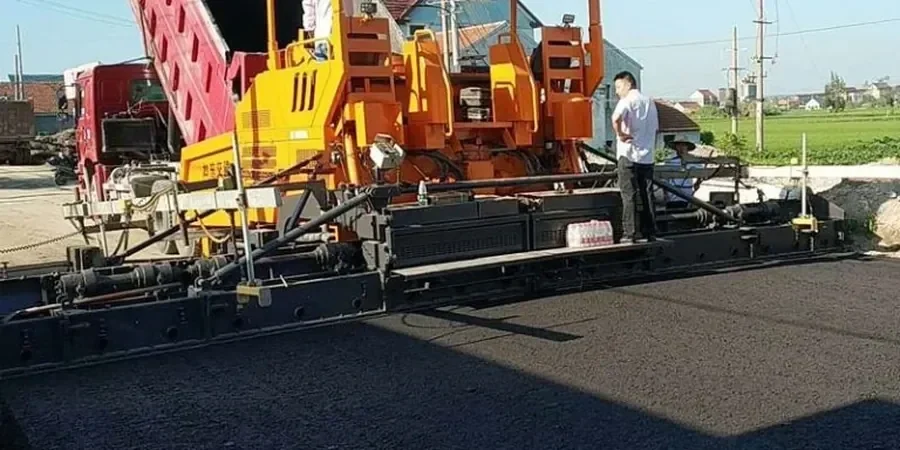
Roadway engineering in Swansea encompasses the full spectrum of design, construction, and evaluation processes required to deliver safe, durable, and efficient transport corridors. From arterial routes connecting the M4 to local access roads serving coastal and hillside communities, every project demands a tailored approach that balances traffic loading, environmental exposure, and ground conditions. The category covers pavement structural design, subgrade assessment, drainage integration, and material specification, ensuring that each roadway performs reliably under both everyday use and extreme weather events common to South Wales.
Swansea's geological setting introduces a distinct set of challenges and opportunities for roadway development. Much of the city and its immediate hinterland is underlain by glacial till, alluvial deposits along the Tawe and Loughor corridors, and weathered Coal Measures bedrock. These variable ground profiles mean that bearing capacity can shift dramatically over short distances, and groundwater levels are often high in valley-floor locations. A thorough understanding of local geotechnics is therefore not just advisable but essential: inadequate subgrade preparation in these conditions leads rapidly to differential settlement, rutting, and premature pavement failure.
Design and execution are governed principally by the Design Manual for Roads and Bridges, which applies across England, Scotland, and Wales, supplemented by local authority specifications adopted by Swansea Council. The DMRB sets out mandatory requirements for geometric layout, structural pavement design, drainage, and earthworks, while the Specification for Highway Works provides the detailed construction standards. Compliance with these documents ensures that all roadway assets meet national safety and durability benchmarks, and that materials and workmanship are auditable against recognised performance criteria.
Projects that call upon roadway engineering expertise range from greenfield link roads serving new residential and commercial developments to the structural rehabilitation of existing carriageways that have reached the end of their service life. A flexible pavement design remains the predominant choice across Swansea due to its adaptability to variable ground and staged construction, while bus lanes, industrial estates, and heavily trafficked junctions often justify a rigid pavement design for its longevity under concentrated loads. Before either can be finalised, a CBR study for road design is typically commissioned to quantify subgrade strength and inform the required layer thicknesses, ensuring the structural section is neither over-engineered nor vulnerable to early distress.
Flexible pavements distribute loads through layered granular and bituminous materials, making them well-suited to Swansea's variable glacial till and alluvial subgrades where some settlement can be tolerated. Rigid pavements use concrete slabs to bridge weaker spots via flexural strength, offering higher durability under standing traffic and in bus lanes but requiring very uniform support to avoid cracking.
Swansea's geology transitions rapidly between Coal Measures bedrock, glacial deposits, and soft estuarine silts. A dedicated ground investigation identifies the bearing capacity, groundwater regime, and any contamination, allowing engineers to design appropriate capping layers, pavement foundations, and drainage. Skipping this step frequently results in premature rutting, edge break-up, and costly maintenance liabilities.
The Design Manual for Roads and Bridges is the primary technical framework, setting out structural, geometric, and drainage requirements. Construction is controlled by the Specification for Highway Works and the Manual of Contract Documents for Highway Works. Swansea Council also applies its own supplementary conditions and adopts roads only when they comply with Section 38 agreements under the Highways Act 1980.
New housing estate distributor roads, industrial access routes, highway widening schemes, and major rehabilitation of trunk roads all demand a complete pavement design. Even resurfacing projects may need structural evaluation if traffic loads have increased. In each case, the design package defines layer materials, thicknesses, and compaction specifications to achieve the required 40-year design life.
We serve projects across Swansea and surrounding areas.