GEOTECHNICAL ENGINEERING
SWANSEA
HomeLaboratoryLaboratory CBR test

Laboratory CBR Testing in Swansea: Reliable Pavement Design Data

Rigorous testing. Clear reporting.

LEARN MORE

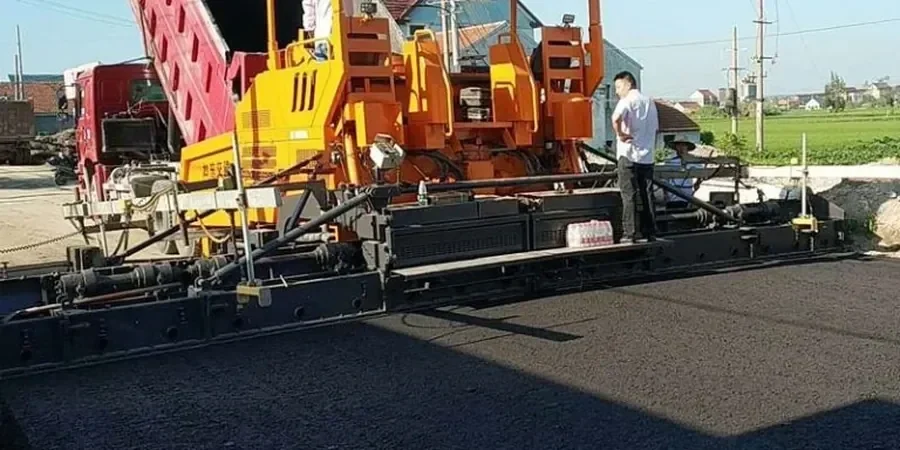
Swansea sits on a complex mix of glacial till, alluvial gravels, and the Coal Measures bedrock that shaped this city. The water table here can rise fast — just look at the marina and the Tawe corridor after heavy rain. That moisture sensitivity is exactly why a standard site investigation alone won't cut it for pavement design. You need a soaked Laboratory CBR test that replicates what happens to your subgrade after months of Welsh winter. Our lab runs the full procedure under BS 1377-4:1990, measuring penetration resistance at the moisture condition that matters most. For highway schemes along Fabian Way or industrial access roads in Port Tennant, we deliver results that feed directly into pavement thickness calculations per IAN 73/06 and HD 26/06.

A soaked CBR value of 2% versus 5% can double your pavement thickness — and your construction budget. The difference is in the lab procedure.
Our service areas

Approach and scope

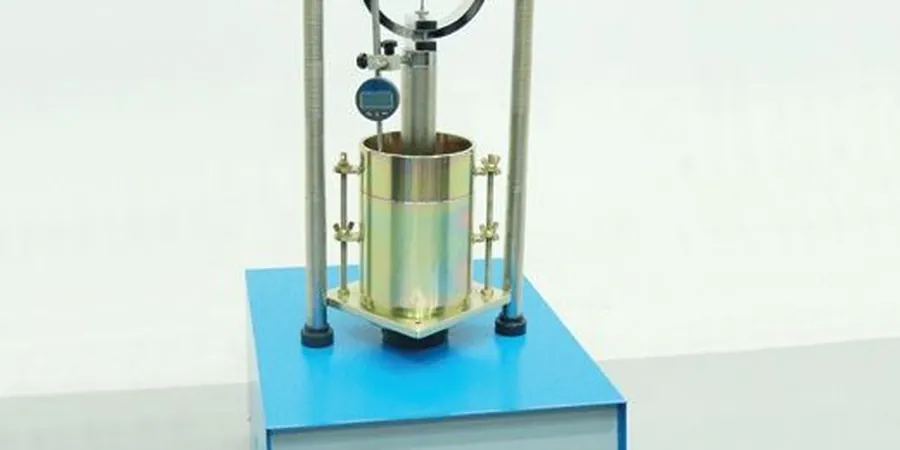
BS 1377-4:1990 and the Highways England DMRB set strict protocols for the California Bearing Ratio test, and in Swansea those protocols are non-negotiable. The city's glacial deposits often contain lenses of silt and soft clay that collapse under repeated loading if not identified early. Our laboratory compacts specimens at five different moisture contents, soaking them for 96 hours to simulate long-term saturation. We measure swelling during soaking, then run penetration at a controlled rate of 1.27 mm/min using a calibrated proving ring. The resulting force-penetration curve tells you exactly where your subgrade sits on the CBR scale. For projects involving flexible pavement construction, we often recommend pairing the CBR with Proctor tests to establish the compaction target before any material leaves the site. This combination eliminates guesswork and reduces over-design costs.
Laboratory CBR Testing in Swansea: Reliable Pavement Design Data
Technical reference — Swansea

Site-specific factors

A contractor we worked with near Swansea Vale laid a haul road over silty clay without a soaked CBR. First winter, the road rutted so deep that loaded trucks couldn't reach the piling rig. The delay cost them three weeks and a full reconstruction of the sub-base. That silty clay had a CBR below 2% once saturated — fine in summer, useless in winter. The Laboratory CBR test would have revealed the problem at design stage. Instead, they paid for it in crushed stone, lost time, and a very unhappy client. Swansea's rainfall averages over 1,100 mm per year, and the groundwater in the Tawe floodplain sits barely a metre below ground level. Pavement design here must assume full saturation. Anything less is a gamble.

Need a geotechnical assessment?

Reply within 24h.

Email: contact@geotechnical-engineering.biz

Relevant standards


BS 1377-4:1990 – Soils for civil engineering purposes, Part 4: Compaction-related tests, IAN 73/06 – Design guidance for road pavement foundations, HD 26/06 – Pavement design and maintenance, DMRB Volume 7, BS EN 1997-2:2007 (Eurocode 7) – Ground investigation and testing

Technical parameters

ParameterTypical value
Test standardBS 1377-4:1990, Clause 7
Specimen preparation5-point compaction (Proctor methodology)
Soaking period96 hours under water (standard)
Penetration rate1.27 mm/min (0.05 in/min)
Surcharge weight4.5 kg annular surcharge plates
Penetration readingsAt 2.5 mm and 5.0 mm penetration
Swelling measurementRecorded every 24 hours during soak
ReportingCBR value at both penetration depths, plus swell percentage

Q&A

How much does a laboratory CBR test cost in Swansea?

A standard soaked CBR test ranges from £100 to £180 per specimen, depending on whether you need the full 5-point compaction curve alongside it. Unsoaked tests are typically at the lower end. We provide a firm quote once we know the number of samples and the required turnaround.

How long does the CBR test take?

A soaked CBR test requires a minimum of 96 hours (four days) for the saturation period, plus 24 to 48 hours for compaction, setup, and penetration. Total turnaround is typically five to six working days. Unsoaked tests can be completed in two to three working days.

Do I need soaked or unsoaked CBR for my Swansea project?

For any permanent pavement or highway structure in Swansea, Highways England standards require the soaked CBR. The city's high rainfall and shallow groundwater mean that subgrade moisture conditions will reach equilibrium near saturation. Unsoaked values are only appropriate for temporary works or construction-phase access roads with a lifespan under 12 months.

Location and service area

We serve projects across Swansea and its metropolitan area. More info.

View larger map