GEOTECHNICAL ENGINEERING
SWANSEA
HomeFoundationsRaft/mat foundation design

Raft Foundation Design in Swansea: Geotechnical Rigour for Complex Ground

Rigorous testing. Clear reporting.

LEARN MORE

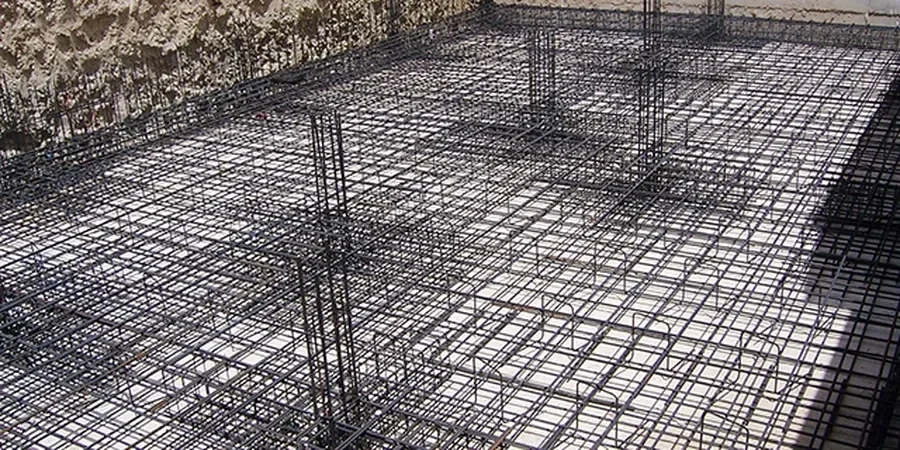
Drive from the maritime alluvium around SA1 down to the sandstone ridge of Townhill and you feel the difference underfoot before you see it in a borehole log. Swansea's ground profile switches from compressible estuarine clays near the Tawe to stiff glacial till and weathered Coal Measures within half a mile, which means a pad-and-strip approach that works in Sketty can become a settlement risk down by the marina. For schemes on these transitional soils, raft foundation design often provides the most rational load-spreading solution, bridging localised soft spots without resorting to deep piles on every grid line. Our team works directly with ground investigation data from CPT testing and trial pits to calibrate the modulus of subgrade reaction across the footprint, not just from a textbook table, so the mat thickness and reinforcement reflect what the ground actually offers rather than a conservative assumption that drives up concrete volume.

A raft on Swansea's glacial till is rarely a textbook rigid slab; it's a tuned plate matching stiffness to the buried channel geometry beneath the footprint.
Our service areas

Approach and scope

The BGS mapping for the Swansea district shows a blanket of Devensian till overlying the Middle Coal Measures, but the till itself is anything but uniform. Thickness varies from less than two metres on the flanks of Kilvey Hill to over fifteen metres in buried channels running toward the bay, and the fines content swings from sandy-silty to a stiff laminated clay that can soften rapidly when exposed in an open excavation. A raft foundation design here has to account for both the spatial variability of the bearing stratum and the historic mine workings that pepper the coal outcrop. We build the ground model from closely spaced window sampler boreholes and dynamic probing to flag voids or softened zones, then run settlement analyses under the serviceability limit state using the drained and undrained parameters that match the local lithology. Where the till thins and the raft bears partly on weathered rock, we check the differential stiffness across the contact, often stiffening the mat with a perimeter beam or local thickening rather than assuming an infinitely rigid slab. The design sequence follows BS EN 1997-1 and the UK National Annex, with partial factors calibrated for the site's geotechnical complexity.
Raft Foundation Design in Swansea: Geotechnical Rigour for Complex Ground
Technical reference — Swansea

Site-specific factors

Swansea's tidal reach and the legacy of coal extraction create two overlapping risks that a raft foundation design must address head-on. The water table along the coastal corridor rises and falls with the Bristol Channel tides, cycling pore pressures beneath the mat twice daily and accelerating degradation of desiccated clay stiffness where the raft sits above mean low water. Meanwhile, abandoned mine entries and shallow pillar-and-stall workings under parts of St Thomas, Landore and Morriston introduce a collapse hazard that a conventional bearing capacity check will not capture. We treat the raft as a structural bridge over potential void migration zones, reinforcing the mat to span a notional cavity and verifying the design with a crown-inversion model derived from the Coal Authority's mining reports. The combination of tidal hydrology and mining subsidence is uniquely Swansea: a raft that ignores either factor will not stay within the angular distortion limits that the superstructure assumes.

Need a geotechnical assessment?

Reply within 24h.

Email: contact@geotechnical-engineering.biz

Relevant standards


BS EN 1997-1:2004 Geotechnical design – General rules, BS 5930:2015 Code of practice for ground investigations, BS EN 1992-1-1:2004 Design of concrete structures, CIRIA C758 Abandoned mine workings manual, BRE Digest 471 Ground-bearing floor slabs and raft foundations

Technical parameters

ParameterTypical value
Bearing stratumGlacial till / estuarine alluvium / weathered Coal Measures
Typical allowable bearing pressure (till)100–250 kPa depending on consistency and depth
Mat thickness range400–1200 mm for RC35/45 exposure class XC2
Design standardBS EN 1997-1:2004 + UK National Annex
Ground investigation inputCPT, SPT, window sampling, trial pits, lab consolidation
Settlement criterionTotal < 50 mm; angular distortion < 1/500 for framed structures
Key geohazardMining voids, soft alluvial pockets, tidal groundwater fluctuation
Subgrade reaction modulus derivationBack-calculated from settlement analysis, not adopted from generic tables

Q&A

What makes raft foundation design in Swansea different from a standard mat on stiff clay?

The ground beneath Swansea is a patchwork of glacial till, estuarine alluvium and Coal Measures, frequently cut by buried channels and undermined by historic coal workings. A raft here must be designed as a structural bridge over potential void zones while also managing the tidal groundwater regime that softens the upper till. Standard prescriptive rafts rarely address the mining legacy, which is why we tie the reinforcement layout to a collapse-inversion check using Coal Authority records and site-specific void-probing data.

How much does a raft foundation design typically cost for a Swansea residential or commercial project?

For a geotechnical design package covering ground investigation specification, interpretive report, settlement analysis and reinforced concrete raft design with construction drawings, the fee generally falls between £800 and £3,650. The spread reflects the size of the footprint, the complexity of the ground model and whether mining-risk mitigation measures such as void-spanning reinforcement or gas protection membranes need to be incorporated.

Is a raft foundation always the right solution on Swansea's mining-affected land?

Not always. A raft works well where the mine workings are deep enough that the collapse zone does not propagate to the surface, or where the mat can span a notional void with controlled angular distortion. If the workings are shallow and the risk of crown hole migration is high, we may recommend a piled solution that transfers load below the worked seams, or grouting to stabilise the voids before placing the raft. The choice depends on the depth to the seam, the pillar extraction ratio and the sensitivity of the structure above.

Location and service area

We serve projects across Swansea and its metropolitan area.

View larger map