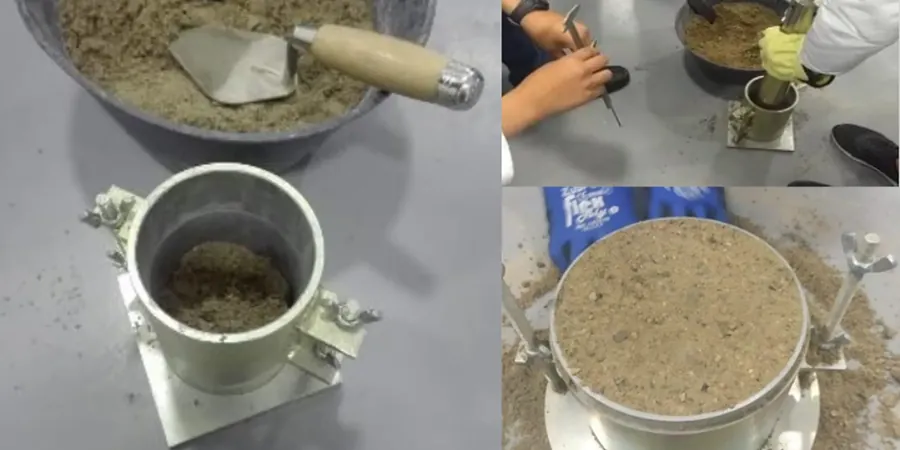
A recent residential development on the slopes overlooking Swansea Bay ran into trouble when fill placed during a wet February failed to meet specification. The contractor had compacted the material at moisture content well above optimum, and the layer fluffed up within weeks. That is exactly the kind of problem a properly executed Proctor test prevents. In Swansea, where glacial till and weathered Coal Measures sandstone often end up as site-won fill, knowing the relationship between moisture and density is not optional—it is the difference between a stable platform and a call-back. Our laboratory runs both Standard and Modified Proctor compaction tests to BS 1377-4:1990, giving earthworks designers the target values they need before a single roller hits the ground. When the project also calls for in-situ verification, we pair the lab data with sand cone density testing so the field crew can check compaction as the lifts go in.
A Proctor curve is not just a lab graph; it is the single most cost-effective tool for avoiding under-compaction failures that can delay a Swansea project by months.